3 Ways a Smarter Map Embed Strategy Boosts Local Authority Without Backlink Spam
3 Ways a Smarter Map Embed Strategy Boosts Local Authority Without Backlink Spam
For years, the mantra of the local search industry was simple: “Build more links.” But as we move deep into 2026, the landscape has shifted beneath our feet. We are no longer operating in a web of simple hyperlinks; we are operating in a spatial web dominated by AI search agents and what I call “Neural Mapping Gaps.” Traditional backlink spam – those thousands of low-quality guest posts and directory submissions – is no longer the primary driver of local rankings. In fact, it’s often a liability.
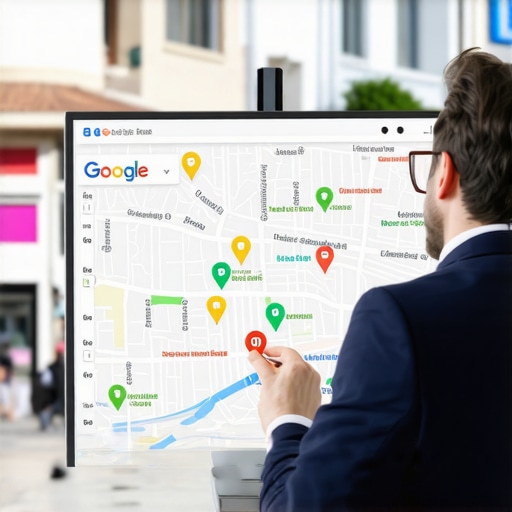
Local SEO isn’t just marketing anymore; it’s infrastructure. To rank higher on google maps, you must prove to Google’s proximity algorithms that your business isn’t just a digital ghost, but a physical pillar of the community. This is where a sophisticated map embed strategy comes into play. By moving beyond the “footer map” and treating Google Map embeds as authoritative spatial signals, you can build an “Entity Trust Score” that outshines competitors who are still stuck in the link-building tactics of 2018.
Why Traditional Backlink Spam is Failing Local Businesses in 2026
The era of “Zero-Trust Verification” is here. Google’s algorithms have become incredibly adept at identifying patterns that look like artificial authority. When a plumber in Chicago gets a backlink from a lifestyle blog in Malaysia, it doesn’t build local trust; it triggers a red flag. In the current google business profile seo environment, Google is looking for “Spatial Data” and “Entity Cohesion.” They want to see that your digital footprint matches the physical reality of your service area.
Many businesses find themselves trapped in “Verification Hell” or the dreaded “The Google Business Support Loop: How to Escape Automated Rejections.” This often happens because their online presence lacks local cohesion. If your website says you serve a 20-mile radius, but your digital signals (like backlinks and mentions) are scattered globally, Google’s AI agents perceive a “Neural Mapping Gap.” This gap creates a lack of confidence in your business’s physical location, leading to suppressed rankings or even suspension.
Instead of chasing high-volume, low-quality links, local businesses must focus on building “Entity Trust.” This involves creating a web of signals that all point to a single, verified physical location. Map embeds, when used strategically, serve as a bridge between your website’s content and Google’s own mapping database. They are not just UI elements for users; they are API-driven signals that confirm your coordinates, your service area, and your relevance to specific geographic queries. Before you invest in another round of guest posts, you should learn “How to Vet Your Local SEO Service Before They Get Your GMB Suspended” to ensure they understand the shift from link volume to spatial authority.
Strategy #1: Contextual Service-Area Embeds (Beyond the Footer)
The most common mistake in google business profile optimization is sticking a single Google Map in the website footer and calling it a day. While this provides a basic signal, it’s a generic one. To truly rank google business profile assets in competitive markets, you need contextual embeds that reflect the specific areas you serve.
In 2026, we focus on “Hyperlocal Landing Pages.” If you are a contractor serving five different suburbs, each of those suburb pages should have a unique, contextual map embed. But don’t just embed your business pin. Instead, embed “Directions” maps or “Search Near” maps. For example, a page targeting “Roofing Services in Naperville” should feature an embed showing directions from a prominent Naperville landmark to your office, or a map showing your recent project pins within that specific zip code.
This is where local seo tools like SEO Viper Tools become essential. By using a google maps rank tracker, you can measure the “Share of Local Voice” in specific neighborhoods. Research shows a massive difference in how Google interprets zoom levels. A map embed showing a 36-square-mile radius signals intense local specialization, whereas a 1440-square-mile map signals a broader, perhaps less relevant, service area. By adjusting the zoom level and the center point of your embeds on geo-targeted pages, you are effectively “painting” your service area for Google’s proximity filters.
Furthermore, these contextual embeds should be paired with hyperlocal content. If your map shows a route through a specific neighborhood, your text should mention the landmarks and street names visible on that map. This creates a “Spatial Correlation” signal that is much harder to fake than a standard backlink. If you’re struggling with visibility, it’s worth reading “4 Real-World Ways to Expand Your Map Search Radius Without Buying Ads” to understand how these spatial signals interact with organic search results.
Strategy #2: Leveraging Community Platforms for “Social Map Signals”
One of the most overlooked google maps ranking tips is the power of off-site map embeds. In the current search climate, Google is giving massive weight to community platforms like Reddit, Quora, and local neighborhood forums. These sites are viewed as high-trust environments because they are driven by real human interaction rather than SEO-optimized content.
When you participate in a local subreddit – perhaps answering a question about the “best plumbers in [City]” – and you include a link to a Google Map showing your service area or office location, you are creating a “Social Map Signal.” This isn’t just a link; it’s a co-occurrence of your brand name, a high-authority domain, and your specific spatial coordinates. This creates a powerful “Entity-Location” association in Google’s Knowledge Graph.
This strategy aligns perfectly with the trend where community platforms are becoming “New Search Ranking Signals.” If a user on Quora asks for a recommendation and you provide a helpful answer with a map embed, you are demonstrating “Interaction Depth.” Google tracks how users engage with these maps – do they zoom in? Do they click for directions? These interactions are the 2026 differentiator. A business with 10 high-engagement map embeds on community sites will often outrank a business with 100 “dead” backlinks. This is a core component of a modern google maps ranking service.
To make this work, you must avoid being spammy. The map embed must add value to the conversation. For instance, if you are discussing a local traffic issue or a community event, embedding a map that highlights the location builds genuine authority. This approach is a key reason “Why Your Hyperlocal Content Strategy Is Not Triggering the Map Pack”; if your content is only on your site and not reflected in the broader local digital conversation, it lacks the necessary social proof to move the needle.
Strategy #3: The “Spatial Entity” Approach, Syncing Schema with Embeds
The final piece of the puzzle is creating a “Map-Schema Loop.” A map embed is a visual and API-based signal, but it needs to be backed up by technical data to be fully effective. This is where local search optimization meets technical data engineering. Every map embed on your site should be perfectly synchronized with your JSON-LD LocalBusiness schema.
Your schema shouldn’t just list your address; it should include the `hasMap` property, the `geo` property (latitude and longitude), and the `map` property (linking directly to your Google Maps CID URL). When a Google bot crawls your page, it should see a perfect 1:1 match between the coordinates in your schema and the coordinates in your iframe embed. If there is even a slight discrepancy – perhaps your schema uses the front door coordinates while your map embed uses the center of the building – it can create a “Data Conflict” that lowers your “Entity Trust Score.”
Using local seo ranking tools like SEO Viper Tools allows you to audit these technical details to ensure your google business profile seo is airtight. You want to ensure that your Place ID is consistent across all platforms. Many businesses fail to rank because of “The Schema Errors That Keep Your Business From Showing in Local Search.” Common errors include using outdated Map URLs or failing to link the schema to the specific “Search Near” URL generated by a map embed.
By syncing your schema with your embeds, you are creating a “Spatial Entity.” This tells Google: “This business exists at these exact coordinates, serves this exact area, and is recognized by the mapping API as a verified entity.” This level of technical cohesion is what allows a business to dominate the local map pack even in high-competition niches. It’s not about the number of links you have; it’s about the density and accuracy of your spatial data. Utilizing SEO Viper Tools to rank google business profile listings ensures that your technical foundation is as strong as your content strategy.
Conclusion: Moving from Map Pins to Local Dominance
In 2026, a Google Map embed is far more than a “Contact Us” page feature. It is a vital piece of digital infrastructure that signals trust, proximity, and relevance to an increasingly sophisticated search algorithm. By moving away from the “backlink spam” mentality and embracing a “Spatial Entity” approach, you can build a more resilient and authoritative local presence.
Remember, map embeds are a trust signal, not just a UI element. Whether you are creating contextual embeds for service pages, leveraging community platforms for social signals, or syncing your technical schema, the goal is the same: to eliminate “Neural Mapping Gaps” and prove your business’s physical authority. If you find your business stuck in “Map Ghosting” – where you simply don’t appear despite having good reviews – it may be time for a comprehensive google business profile audit.
Don’t let your local authority be undermined by outdated tactics. If you’re ready to increase google business profile visibility and secure your spot in the top 3, consider a professional google maps ranking service that understands the nuances of spatial data. Success in local search today requires more than just being “on the map”; it requires dominating the map through strategic, data-driven infrastructure. Start by using local seo ranking tools to see where you truly stand, and then build the spatial authority your business deserves.