
The specific local SEO moves that get pest control companies more calls
The Specific Local SEO Moves That Get Pest Control Companies More Calls
In the high-stakes world of pest control, being “good at what you do” isn’t enough if your business is invisible. You might have the most effective termite treatment in the county or the quickest response time for emergency rodent removals, but if you aren’t appearing in the Google Map Pack when a frantic homeowner searches for “pest control near me,” you don’t exist. For most customers, a pest infestation is an emergency state. They aren’t scrolling to page two of the search results; they are calling one of the top three businesses they see on their mobile screen.
As a Contractor Marketing Specialist, I’ve seen many pest control owners fall into the trap of thinking standard SEO – the kind that worked in 2018 – is still the ticket to growth. It isn’t. While your competitors are still obsessively stuffing keywords into their website footers (a tactic that Reddit research and modern algorithm updates confirm is failing), the real winners are focusing on “Interaction Depth” and local authority. My philosophy is simple: we empower home service businesses like pest control companies to master Google marketing and dominate their local market. To do that in 2026, you need a strategy focused on “Direct Response Map Leads,” not just vague brand awareness.
Why Standard SEO Fails Pest Control Businesses in 2026
The landscape of local search has shifted dramatically. We have entered the era of the “Proximity Filter” and “Neural Mapping Gaps.” In the past, if you had enough backlinks, you could rank for a city thirty miles away. Today, Google’s AI is much more discerning. It prioritizes the user’s immediate physical location, often creating a “Map Radius Decay” where your visibility drops off a cliff just a few blocks from your office.
Standard SEO fails because it treats a pest control company like a national e-commerce site. It focuses on global domain authority rather than local prominence. To beat the 2026 proximity filters, you must understand that proximity is no longer the only factor; relevance and prominence (authority) can actually override being the “closest” option if Google trusts your business more. This is where 3 Tactics Local SEO Experts Use to Beat 2026 Proximity Filters come into play, allowing you to expand your “calling area” beyond your front door.
In 2026, Google uses neural matching to understand the relationship between your business and the specific problems users have. If someone searches for “wasp nest removal,” and your profile only mentions general “pest control,” you might lose the lead to a smaller competitor who has specifically optimized for that sub-service. You need to bridge these mapping gaps by proving to Google that you are the most relevant authority for every specific pest issue in your service area.
Optimizing the Google Business Profile (GBP) for Maximum Conversion
Your Google Business Profile is your digital storefront. For a pest control company, it is often more important than your actual website because it is the primary source of phone calls. However, many owners set it and forget it, or worse, they fill it with errors that trigger “Zero-Trust Verification” flags, leading to suspensions. To drive calls, you need google business profile optimization that focuses on conversion, not just presence.
Primary and Secondary Categories
The first mistake is choosing the wrong primary category. While “Pest Control Service” is the obvious choice, you should also utilize secondary categories like “Bird Control Service” or “Termite Control Service” if those are core parts of your revenue. This helps Google categorize your business for a wider variety of intent-based searches.
The Description Field: Values Over Keywords
Many owners think the description is a place to list every zip code they serve. This is a mistake. Google’s algorithms are now sophisticated enough to see this as spam. Instead, focus on your Unique Selling Proposition (USP). Do you offer organic treatments? Same-day service? A 100% guarantee? Reference The Tiny Description Errors That Local SEO Experts Find in Under Five Minutes to ensure you aren’t accidentally triggering a filter that suppresses your ranking.
The Services List: The Long-Tail Goldmine
The “Services” section of your GBP is where you can truly differentiate yourself. You must explicitly list every specific pest you treat: ants, termites, bed bugs, rodents, cockroaches, spiders, and wildlife. When a user searches for a specific pest, Google looks at these service lists to determine relevance. By being granular, you capture the long-tail local intent that generalists miss.
The “Interaction Depth” Strategy: Moving Beyond 5-Star Reviews
We’ve all seen it: a pest control company with 500 reviews is being outranked by a company with only 50. Why? Because in 2026, the volume of reviews is secondary to “Interaction Depth.” Google tracks how users interact with your profile. Do they click through your photos? Do they read your Q&A? Do they spend time reading your review responses?
If your profile is a static billboard, your rankings will eventually stagnate. You must turn your GBP into an interactive hub. This is Why Your Competitors Are Still Outranking You Despite Having Fewer Reviews. They are likely generating higher engagement signals.
- Keyword-Rich Review Responses: Don’t just say “Thanks for the business!” When a customer mentions they had a “termite problem in Scottsdale,” your response should mirror that: “We were happy to help resolve your Scottsdale termite problem with our specialized liquid barrier treatment.” This reinforces your geographic and topical relevance.
- Visual Proof (Before & Afters): Pest control is a visual industry. Post high-quality photos of identified pests, treatment setups, and your branded trucks in recognizable local neighborhoods. Google’s AI can “read” these images to confirm you are active in the areas you claim to serve.
- The Q&A Section: Don’t wait for customers to ask questions. Pre-populate your Q&A with the most common concerns: “Is your pet-friendly pest control safe for cats?” or “How long does a bed bug treatment take?” This keeps users on your profile longer, increasing your interaction depth.
Hyperlocal Content & The Death of Keyword Stuffing
The days of creating a “City + Pest Control” page and repeating that phrase fifty times are over. In fact, this often leads to a “Ghosted Pin” – where your business location shows up on the map but never breaks into the top three. To rank higher on google maps, you need hyperlocal content that actually provides value to the resident.
Instead of generic service pages, create “Neighborhood Guides” or “Seasonal Pest Alerts” for specific parts of your city. For example, “Why Termite Season Starts Early in [Neighborhood Name]” or “Common Rodent Entry Points in [City] Older Homes.” This demonstrates to Google that you aren’t just a service provider; you are a local expert with deep knowledge of the community’s specific environment. This is The Map Lead Generation Strategy That Actually Works for Pest Control Companies because it builds trust with both the algorithm and the human lead.
Hyperlocal content also means addressing the specific pests that plague your region. If your city has a unique issue with scorpions or a specific type of invasive ant, your website and GBP should be the definitive resource for that topic. This topical authority signals to Google that you are the most relevant result for those high-intent searches.
Technical Local Signals: Backlinks and Citations
In the world of pest control SEO, not all links are created equal. A backlink from a high-authority global tech blog might look good on a report, but it does almost nothing for your local Map Pack rankings. For a local service business, a link from a neighborhood association, a local Little League team you sponsor, or the city’s Chamber of Commerce is worth its weight in gold.
These are “Hyper-Relevant Local Signals.” They tell Google exactly where you are and who you serve. This is Why Local Backlinks Move the Needle More Than Global Guest Posts. When Google sees your business mentioned on the website of a local hardware store or a community garden blog, it builds a “Local Graph” that confirms your physical presence and community involvement.
Furthermore, you must ensure your citations (Name, Address, Phone Number) are consistent across the web. However, in 2026, it’s not just about the “Big Four” aggregators. You need to be present in niche pest control directories and local business registries. Using local seo ranking tools can help you identify where your competitors are listed and where you have gaps in your local citation profile.
Advanced Tools for 2026: Dominating the Radius
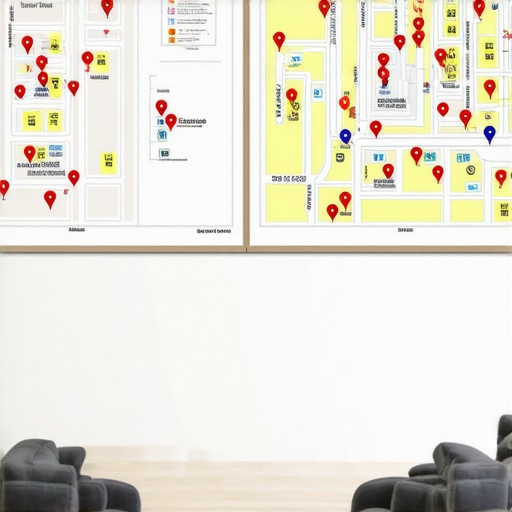
If you are only tracking your rankings from your office computer, you are flying blind. Local SEO is a game of inches – or more accurately, a game of miles. Your ranking in the Map Pack changes depending on where the user is standing. To truly dominate, you need to see the “Heat Map” of your visibility.
Advanced SEO Viper Tools allow you to visualize your ranking across a grid of your entire service area. You might find that you rank #1 in the two-mile radius around your shop, but drop to #8 just three miles away. This “Map Radius Decay” is the silent killer of pest control leads. By identifying these weak spots, you can adjust your hyperlocal content and backlink strategy to “push” your visibility into those lucrative neighborhoods where you are currently invisible.
Furthermore, with the rise of “Zero-Trust Verification,” you need tools that monitor your GBP for unauthorized changes or “Ghosted Pins.” Competitors or malicious actors can often suggest “edits” to your profile that can tank your rankings overnight. A proactive monitoring system is essential for maintaining your lead flow in a competitive market. You should also stay informed on 5 Google Maps Help Tactics for 2026 Zero-Trust Verification to protect your digital assets.
Conclusion: From Invisible to In-Demand
Local SEO for pest control companies is no longer about just “being there.” It’s about being the most relevant, most trusted, and most active option in your specific geographic slice. If your phone has stopped ringing, or if you feel like you are working twice as hard for half the leads, it’s time to stop using outdated tactics.
The “Direct Response Map Leads” strategy requires a commitment to interaction depth, hyperlocal authority, and technical precision. You cannot afford to let your competitors dominate the Map Pack while you wait for “brand awareness” to kick in. If you are struggling with Map Radius Decay or if your business has been sidelined by proximity filters, you need a specialist who understands the unique nuances of the pest control industry.
Local SEO is a marathon, not a sprint, but with the right moves, you can start seeing a significant increase in phone calls in a matter of weeks. Don’t let your business stay invisible. It’s time to reclaim your local market and ensure that when a homeowner in your city has a pest emergency, your business is the first and only one they call. Learn Why Your Phone Stopped Ringing and How to Hire SEO Pros to Fix It to take the first step toward total map domination.